
Hard Surfaces That Stop Holding Stains
Pressure Washing Services in Thomasville, Valdosta, GA, and surrounding areas, for driveways, walkways, and patios with embedded grime and discoloration
Oil drips on concrete driveways don't just sit on the surface—they soak into the porous material, creating dark spots that resist rain and casual rinsing. High-pressure surface cleaning removes built-up grime, organic stains, and tire marks from driveways, sidewalks, patios, and other hard exterior surfaces by directing concentrated water force into the textured pores where contamination embeds itself. Carter & Son's Pressure Washing applies this method to residential and commercial properties throughout Thomasville, Valdosta, GA, and surrounding towns, where red clay dust mixed with seasonal pollen creates a layer of caked-on residue that dulls concrete and pavers within months of installation.
The process works by using pressurized water to dislodge particles trapped below the visible surface layer, lifting dirt that's compressed into concrete texture over time through foot traffic and vehicle weight. Eco-friendly cleaning solutions pre-treat oil stains and biological growth before the high-pressure pass, breaking down substances that water pressure alone won't fully remove. This combination restores the original appearance of driveways and walkways, revealing the aggregate color and uniform tone that new concrete displays before exposure to weathering and use.
Arrange an on-site assessment to determine which surfaces require high-pressure treatment and which need alternative methods.
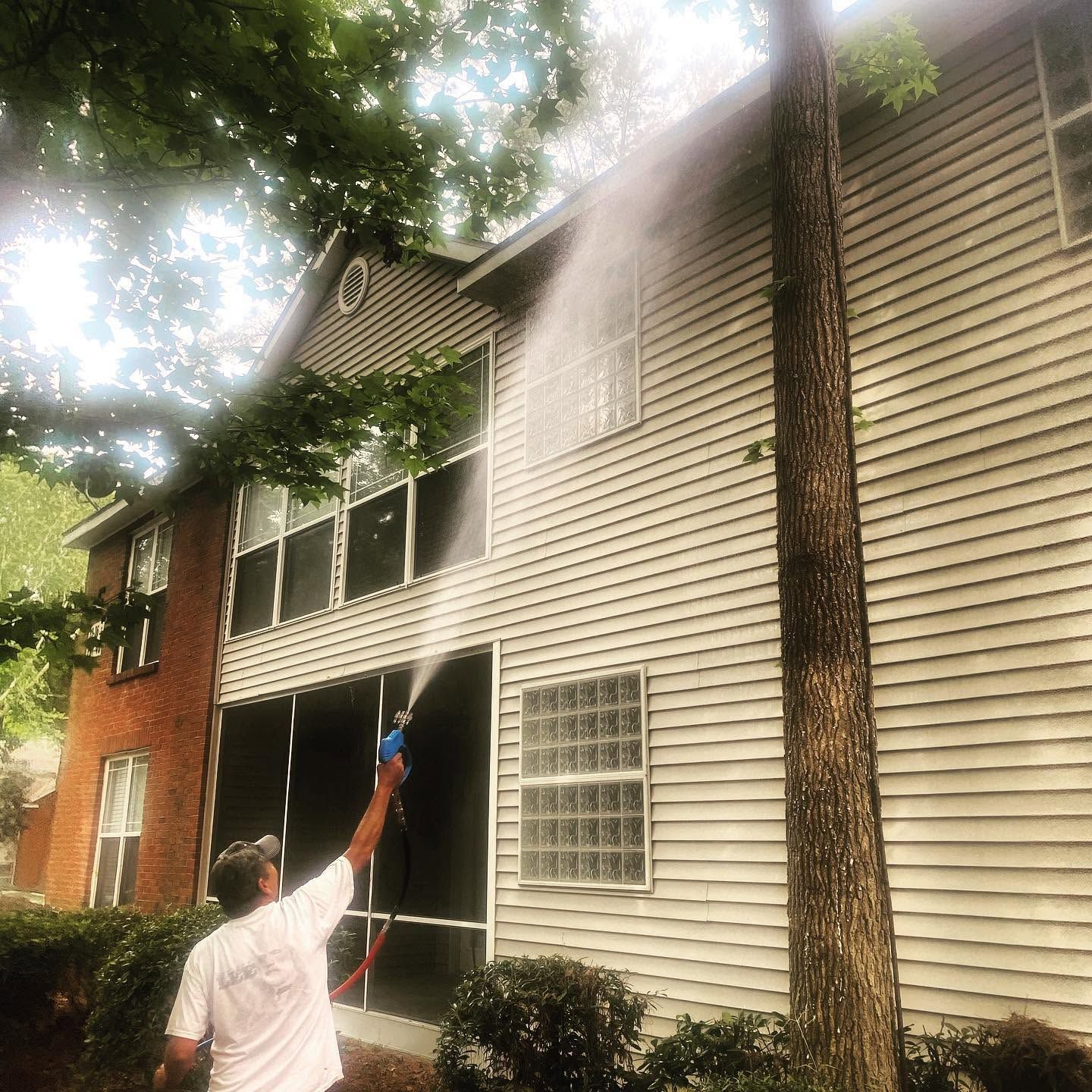
How Pressure Washing Restores Surface Appearance
Surface preparation includes clearing loose debris and applying pre-treatment solutions to areas with heavy staining or organic growth, allowing those agents to penetrate before the main cleaning pass. The high-pressure water stream—significantly stronger than garden hose output—scours the concrete or paver surface in overlapping passes, ensuring even cleaning without the striped pattern that results from inconsistent technique. Containment and runoff management prevent dirty water from spreading contamination to landscaping or stormwater systems.
After pressure washing, you'll see that concrete returns to a lighter, more uniform shade across the entire surface, with tire tracks and oil spots no longer visible as dark contrasts against the surrounding area. Moss and algae growing in shaded sections or along edges disappear completely, eliminating the slippery film that makes walkways hazardous when wet. The cleaned surface also dries faster after rain because water no longer clings to the biofilm layer that untreated concrete develops, reducing the time that moisture sits on the surface promoting new growth.
Pressure washing is appropriate for concrete, asphalt, brick pavers, and stone surfaces designed to withstand high water force, but should not be used on wood decks, painted surfaces, or any material where the pressure could etch, splinter, or drive water into seams. The service focuses on horizontal load-bearing surfaces and vertical walls made from masonry or similar dense materials that benefit from aggressive cleaning without risk of damage.
Common Questions About High-Pressure Cleaning
Property owners considering pressure washing typically want to understand what the service accomplishes and how it differs from other exterior cleaning methods.
What types of stains can pressure washing remove from concrete?
High-pressure cleaning removes dirt, mud, tire marks, mold, mildew, algae, and most organic staining. Oil and rust stains often require chemical pre-treatment in addition to pressure washing, and some deeply penetrated stains may only lighten rather than disappear completely depending on how long they've been absorbed into the concrete.
How does pressure washing differ from soft washing?
Pressure washing uses high water force to physically scour contaminants from durable surfaces, while soft washing uses low pressure with chemical solutions to kill organic growth on delicate materials. The method choice depends on surface material—concrete and brick typically need pressure, while siding and roofs require soft washing to avoid damage.
Will pressure washing damage my driveway or patio?
When performed with appropriate pressure settings and technique, the process safely cleans concrete, asphalt, and pavers without causing surface erosion or joint displacement. Improper technique—such as holding the nozzle too close or using excessive pressure on deteriorated concrete—can etch surfaces or widen existing cracks, which is why professional equipment calibration matters.
How long does it take for pressure washed surfaces to dry?
Most concrete driveways and patios dry enough for foot traffic within two to four hours under typical conditions, though full curing and readiness for sealing takes 24 to 48 hours depending on temperature and humidity levels during the cleaning.
Can pressure washing be done in any weather?
The service is best performed when temperatures are above 40 degrees and no rain is expected for at least four hours after cleaning, allowing surfaces to dry properly and preventing cleaning solutions from being diluted before they complete their work on pre-treated stains.
Carter & Son's Pressure Washing matches the pressure level and cleaning method to each surface type, ensuring thorough contamination removal without compromising material integrity. Contact the team to schedule service based on your property's specific hard surface cleaning needs.