
Shingles That Stop Feeding Algae Growth
Roof Washing & Soft Wash Roof Cleaning in Thomasville, Valdosta, GA, and surrounding towns, for roofs with black streaks, dark patches, or visible moss accumulation
Gloeocapsa magma—the algae responsible for black streaking on asphalt shingles—doesn't just stain your roof. The organism feeds on the limestone filler in shingles, gradually breaking down the protective granule layer while its dark color absorbs more heat and accelerates shingle aging. Soft wash roof cleaning removes this algae along with moss and lichen using low-pressure application methods that kill organic growth without the shingle damage that high-pressure washing causes. Carter & Son's Pressure Washing treats asphalt, tile, and metal roofs throughout Thomasville, Valdosta, GA, and surrounding areas, where high humidity and afternoon thunderstorms create ideal conditions for algae colonization on north-facing roof planes and shaded sections under tree canopies.
The soft wash method applies cleaning solutions at pressures no stronger than a garden hose, allowing the chemicals to penetrate algae colonies and kill them at the root level rather than simply washing away the visible surface layer. This approach prevents the granule loss and seal damage that occur when high-pressure water is directed at shingles, which can void manufacturer warranties and shorten roof lifespan by exposing the underlying asphalt mat. By eliminating the living organism rather than temporarily removing its appearance, soft washing produces results that last significantly longer than pressure-based cleaning.
Request a roof inspection to identify algae extent and determine the appropriate cleaning approach for your roofing material.
What Proper Roof Cleaning Requires
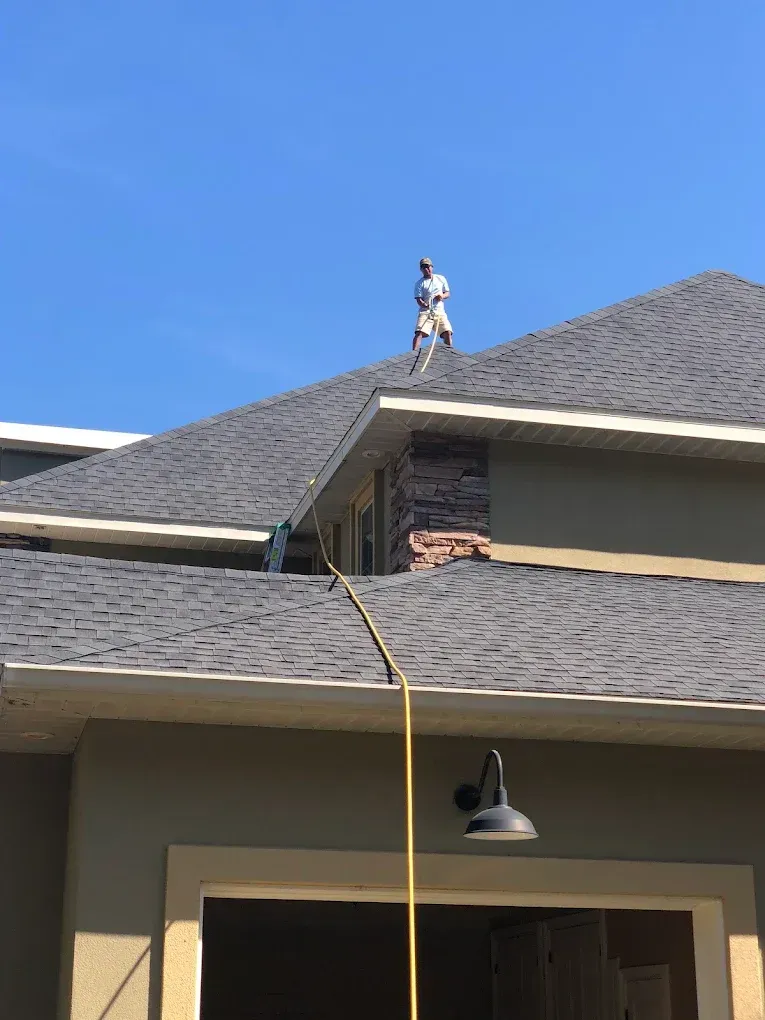
Roof cleaning begins with a full visual assessment to identify damaged or loose shingles that need repair before cleaning proceeds, since applying any cleaning solution or water to compromised areas risks interior leaks. The soft wash solution is applied starting at the roof ridge and working downward, ensuring complete coverage of all affected areas while the cleaning agents dwell long enough to kill algae spores and break down accumulated organic debris. A low-pressure rinse removes the dead algae and solution residue without directing water under shingle edges or into valleys where it could penetrate the roof deck.
Once the roof is treated, the black streaks fade completely within days as rain naturally rinses away the dead algae, revealing the original shingle color underneath. The roof maintains this clean appearance for years rather than months because the treatment kills spores that would otherwise regrow quickly in humid conditions. Homeowners also notice that attic temperatures moderate slightly during summer months since the roof surface reflects more sunlight instead of absorbing heat through dark algae colonies, which reduces cooling costs in Thomasville, Valdosta, GA, and surrounding town's hot season.
Roof washing focuses on removing organic growth and does not include gutter cleaning, chimney treatment, or repair of damaged shingles, which require separate service appointments. The cleaning extends roof lifespan by preventing algae from continuing to degrade shingle granules, but cannot reverse damage already done to shingles where granule loss has exposed the underlying mat.
Answers to Frequent Roof Cleaning Questions
Property owners often have specific concerns about safety, effectiveness, and timing before scheduling their first professional roof cleaning.
Why do black streaks appear on some roofs but not others in the same neighborhood?
Algae growth patterns depend on roof orientation, shade exposure, and moisture retention. North-facing roof planes receive less direct sunlight and stay damp longer after rain, creating better conditions for algae colonization than south-facing sections that dry quickly under full sun exposure.
Will roof cleaning damage my shingles or void the warranty?
Soft wash methods using low-pressure application are explicitly approved by major shingle manufacturers and will not void warranties, unlike high-pressure washing which can strip protective granules and break adhesive seals. Professional roof cleaning actually helps maintain warranty compliance by preventing algae damage that accelerates shingle deterioration.
How long does the cleaning effect last after treatment?
Most roofs stay visibly clean for three to five years following soft wash treatment in Thomasville's climate, though heavily shaded roofs or those under oak trees may show new growth sooner due to constant organic debris accumulation and reduced sunlight exposure that limits natural algae suppression.
Can roof cleaning be done on tile or metal roofs?
Soft wash cleaning is safe and effective for concrete and clay tile, standing seam metal, and corrugated metal roofing in addition to asphalt shingles. The cleaning solution formulation may be adjusted based on roofing material to address specific types of staining or growth without affecting the surface finish.
What time of year is best for roof cleaning?
Spring and fall provide ideal conditions when temperatures are moderate and rain is less frequent, allowing cleaning solutions adequate dwell time and roofs sufficient drying periods. Avoid scheduling during winter months when freezing temperatures could occur before the roof fully dries.
Carter & Son's Pressure Washing uses manufacturer-approved soft wash techniques that remove algae and extend roof lifespan without compromising shingle integrity or warranty coverage. Schedule a consultation to evaluate your roof's current condition and cleaning requirements.